Johdanto
Tämä käsikirja tarjoaa ylityksenview and guide to the core principles and counterintuitive approach presented in Mark Manson's 'The Subtle Art of Not Giving a F*ck'. It aims to clarify the book's concepts for practical application in daily life, encouraging a more grounded and contented existence by focusing on what truly matters.
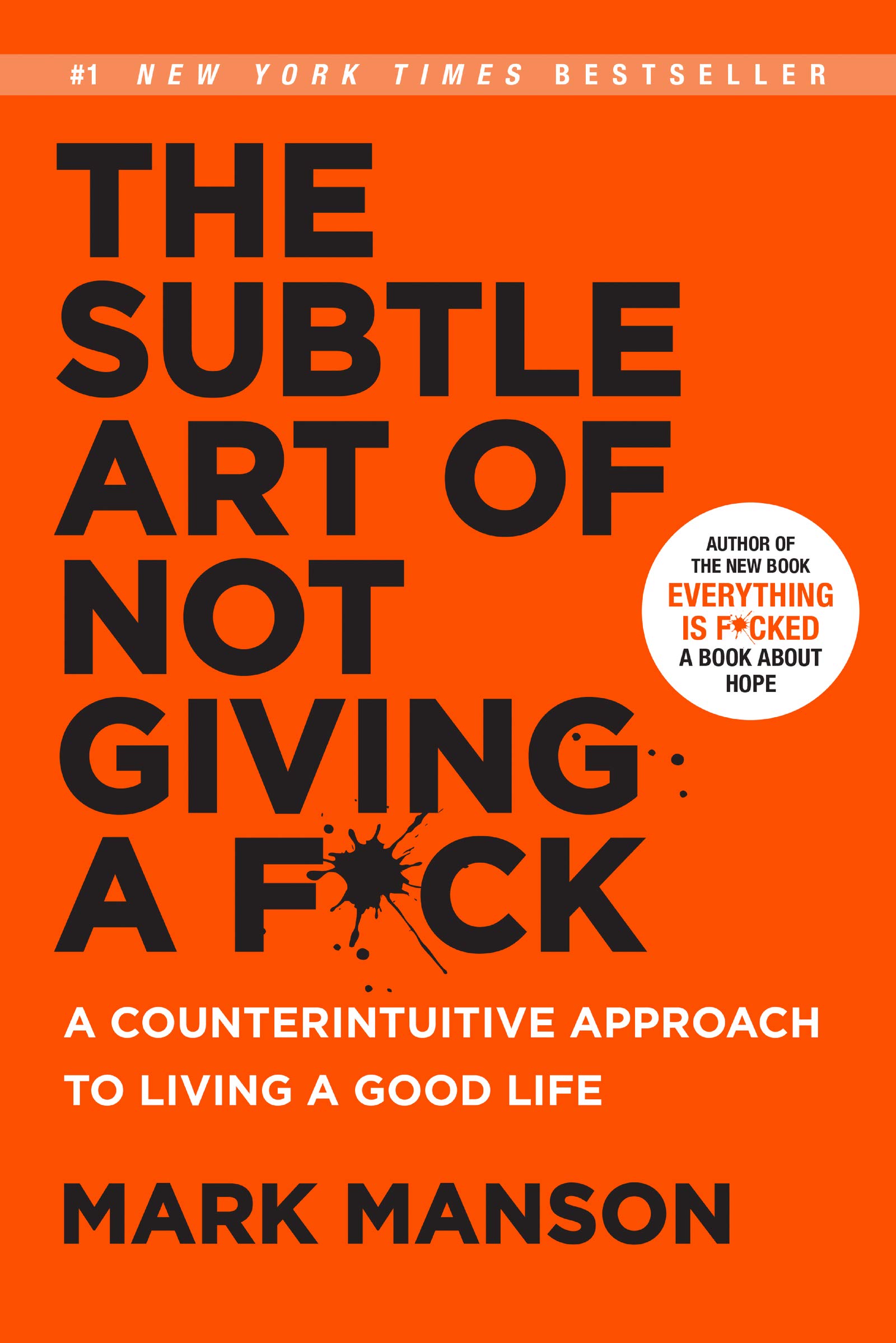
Image: The official cover of the hardcover edition of the book.

Image: Recognition of the book as a #1 New York Times Bestseller with over 10 million copies sold.
Core Principles for Living a Good Life
The book outlines several key principles designed to shift perspective and improve one's approach to life's challenges. Understanding and applying these concepts can lead to greater personal fulfillment.
1. Don't Try
This principle suggests that constantly striving for positivity can be counterproductive. Instead, it advocates for an honest and straightforward approach to life, acknowledging difficulties rather than avoiding them. True growth often comes from confronting uncomfortable truths.
2. Happiness Is a Problem
Manson argues that happiness is not a constant state to be achieved but rather a byproduct of solving problems. Embracing challenges and actively working through them is presented as a path to genuine contentment, rather than seeking to avoid all discomfort.
3. You Are Not Special
This concept encourages individuals to recognize their limitations and accept that not everyone can be extraordinary in every aspect. It promotes self-awareness and humility, suggesting that understanding one's place in the world is a source of empowerment.
4. The Value of Suffering
Suffering is presented as a biologically useful mechanism for personal growth and self-improvement. Rather than being something to be avoided, discomfort and pain are viewed as catalysts that inspire change and lead to a deeper understanding of oneself and the world.

Image: A quote from Steve Kamb highlighting the book's engaging and thought-provoking nature.
5. You Are Always Choosing
This principle emphasizes personal responsibility for one's reactions and choices. It suggests that individuals have the power to shape their circumstances by acknowledging their role in them, leading to conscious decision-making and greater control over their lives.
6. You're Wrong About Everything
The book advocates for a continuous process of self-reflection and questioning one's own beliefs. It encourages embracing uncertainty and being open to new perspectives, which is crucial for intellectual and personal development.
7. Failure Is the Way Forward
Failure and discomfort are not endpoints but essential steps on the path to success. This principle encourages perseverance and learning from mistakes, viewing setbacks as opportunities for growth rather than reasons to give up.
8. The Importance of Saying No
Setting boundaries and prioritizing what truly matters is a central theme. This involves consciously choosing what to invest one's energy in and being willing to decline commitments that do not align with one's core values.
9. And Then You Die
This final principle serves as a reminder of life's finite nature, urging readers to wisely choose what they care about. It emphasizes that true wealth comes from experience and meaningful engagement, rather than superficial pursuits.

Image: A quote from Ryan Holiday describing the book as masterful, philosophical, and practical.
Tekniset tiedot
| Kustantaja | Harper |
| Julkaisupäivä | 13. syyskuuta 2016 |
| Painos | 2. painos |
| Kieli | englanti |
| Tulostuspituus | 224 sivua |
| ISBN-10 | 0062457713 |
| ISBN-13 | 978-0062457714 |
| Tuotteen paino | 11.2 unssia |
| Lukemisen ikä | 18 vuotta ja ylöspäin |
| Mitat | 5.5 x 0.81 x 8.25 tuumaa |
Applying the Principles
To effectively integrate the book's philosophy into your life, consider the following:
- Regular Reflection: Periodically revisit chapters and concepts that resonate most with your current life situations.
- Päiväkirjan pitäminen: Document your thoughts and experiences as you apply the principles. This can help track progress and identify areas for further development.
- Open-mindedness: Approach the book's ideas with a willingness to challenge your existing perspectives and embrace new ways of thinking.
- Kärsivällisyys: Personal growth is a continuous process. Allow yourself time to internalize and implement the concepts without expecting immediate, drastic changes.


